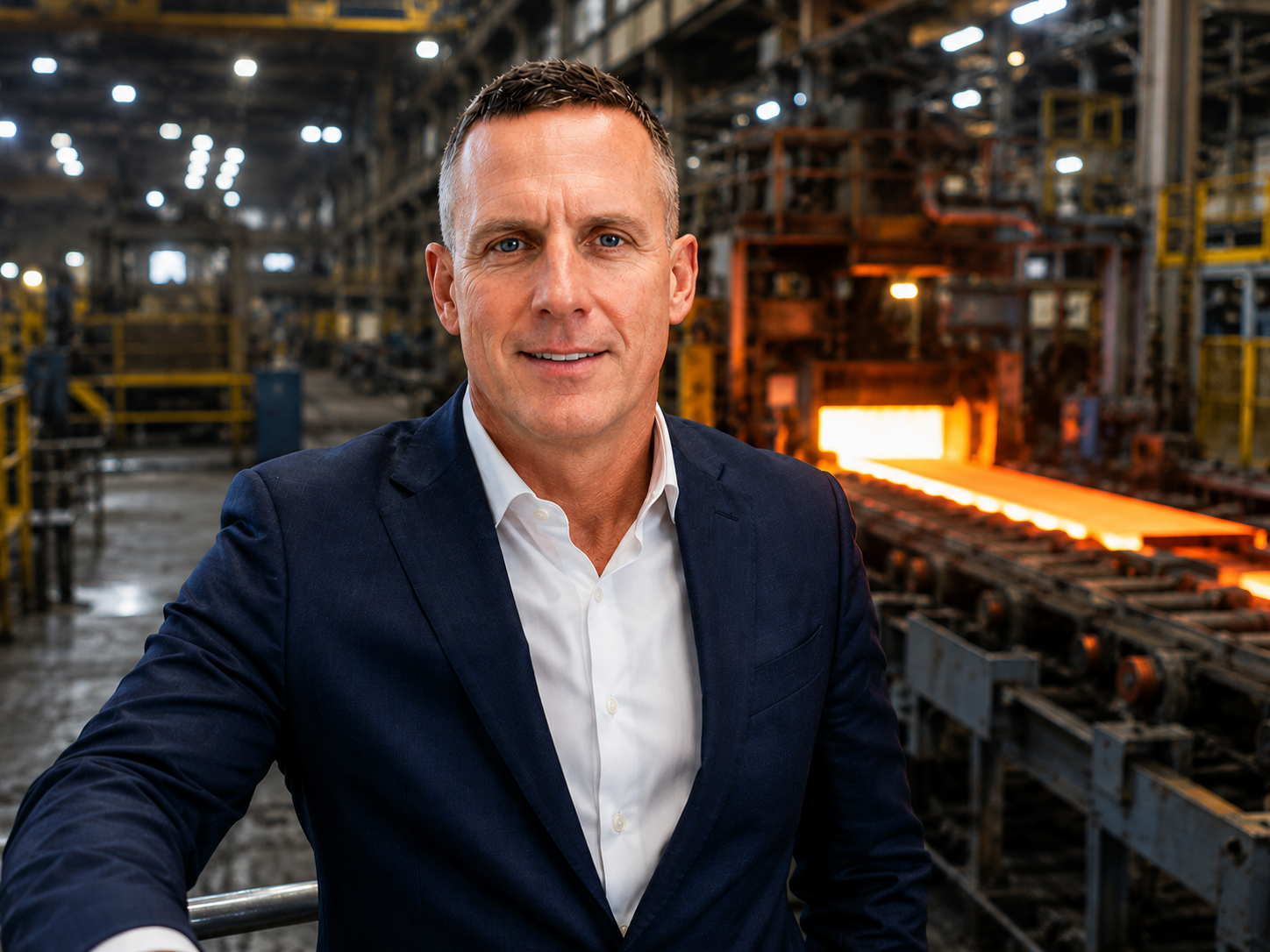
There is a version of cross-border industrial leadership that reads well in strategy documents and does not survive contact with a factory floor. It assumes that markets are variations on the same theme, that regional differences are mostly a matter of tone, and that operating discipline in Sydney travels intact to Bangkok, Shanghai or Chennai. The version that survives contact with a factory floor is very different. It starts from the opposite premise. Every market has its own logic, its own supply chain, its own customer relationships and its own regulatory shape. The job of a regional operator is to hold the whole picture and make it work as one integrated system without pretending the differences are not there.
I have spent thirty years operating industrial businesses across Asia-Pacific – Australia, Thailand, Cambodia, Laos, Myanmar, Sri Lanka, India and China. Steel businesses at every scale from small operations to multi-billion-dollar divisions. Different corporate parents, different regulatory regimes, different customer bases. What follows is a set of observations that recur across all of it – not a strategy framework, just what the work actually looks like when you do it long enough.
LOCAL EXECUTION IS THE WHOLE GAME
The single most durable observation is that in industrial businesses, execution is regional and it is local. There is no such thing as a “regional strategy” that delivers the results without a regional team that can execute it in each market on its own terms. A three-country business is three businesses that share a P&L, not one business with three offices.
The corollary is that the regional executive’s most important job is often not strategy at all. It is building and holding the local leadership team in each market. The best plans in the world do not compensate for a weak country manager in Ho Chi Minh City or a disengaged plant leader in Chennai. Conversely, a strong local team can deliver results the head-office strategy did not anticipate, because they see and adapt to conditions on the ground faster than anyone above them can.
This is not a novel observation, but it is one that consistently gets forgotten in favour of process design, matrix structures and quarterly reporting cadences. Those things matter, but they matter downstream of team quality, not upstream.
CUSTOMER RELATIONSHIPS ARE MEASURED IN GENERATIONS
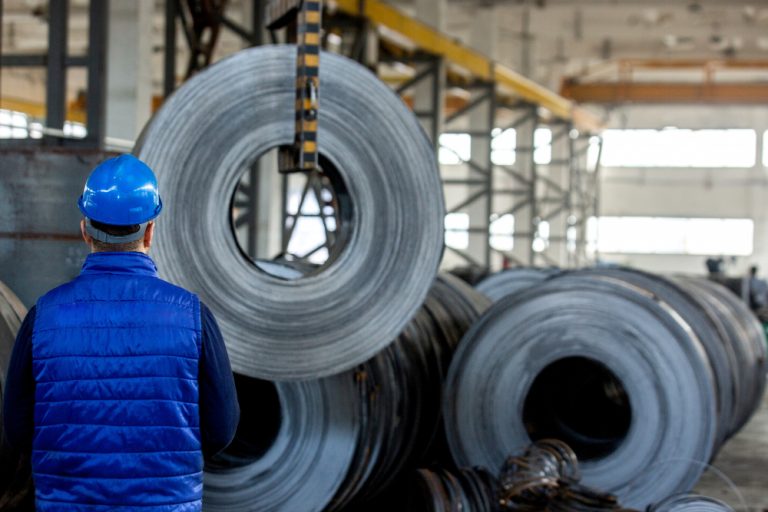
Industrial customer relationships in Asia-Pacific are not built over quarters. They are built over cycles. A steel customer relationship that is fifteen years old is a young relationship. One that is thirty years old is a mature one. This changes almost everything about how a business operates.
It means that short-term commercial optimisation – the kind that looks good in a quarterly review – is often destructive to long-term commercial performance. It means that the person who signed the last contract may be less important than the person who has been buying steadily for a decade. It means that price is one input among several, and often not the most important one. Reliability, technical support, quality consistency and the willingness to hold the line on standards through difficult cycles all compound over time in ways that pricing spreadsheets do not capture.
Regional operators who understand this build businesses that are resilient across cycles. Those who do not build businesses that look strong in favourable conditions and collapse in unfavourable ones.
REGULATORY REGIMES ARE NOT INTERCHANGEABLE
Anyone who has moved capital across Asia-Pacific industrial markets knows that the regulatory regimes are structurally different, not merely superficially different. Australian workplace safety regulation, Thai industrial permitting, Indian environmental compliance, Chinese customs administration – these are not the same problem in different national costumes. They are distinct problems that require distinct capabilities to manage well.
The failure mode I have seen most often is regional teams that treat regulatory difference as friction to be minimised rather than as terrain to be understood. Sustained cross-border performance requires the opposite disposition. Local regulatory expertise is a strategic asset, not a compliance cost. The businesses that invest in it early build durable advantages. The businesses that treat it as an afterthought discover, sooner or later, that they cannot operate at scale in the market without it.
SUPPLY CHAINS HAVE MOOD AND MEMORY
Cross-border supply chains in steel are physical things that move slowly, cost significantly to change, and remember how they have been treated. A regional supplier who has been supported through a demand downturn is a very different counterparty from one who was disintermediated at the first sign of pressure. The consequences of that difference show up years later, when conditions change and you find out how deep your supplier relationships actually are.
The best regional operators I have worked with think about their supply chains the way generational family businesses think about their customers – as long-lived relationships worth investing in, not as transactional resources to be optimised transaction-by-transaction. That disposition takes patience, but the compounding advantages are considerable.
THE MULTI-JURISDICTION FOOTPRINT IS A DIFFERENT ASSET FROM THE SUM OF ITS PARTS
A steel business operating in five countries is not five steel businesses. Done well, it is a single integrated operation with capabilities that no single-country competitor can replicate – product movement across borders, standards alignment across jurisdictions, customer support across time zones, and a portfolio of exposures that smooths out national-cycle volatility. Done badly, it is a collection of underperforming national businesses with more overhead than each one deserves.
The difference between the two comes down to whether the regional leadership treats the integration itself as the product. Coordinated pricing, coordinated capacity planning, coordinated customer engagement, and the discipline to move product and expertise across the network as conditions require – these are the mechanics of getting the multi-jurisdiction footprint to actually pay for itself. Without them, you have expensive geography. With them, you have a genuine regional operating platform.
CLOSING
Cross-border industrial leadership is not glamorous work. Most of it is patient team-building, careful customer stewardship, disciplined regulatory engagement and steady supply-chain management. Very little of it makes it into the annual report. All of it determines whether the annual report tells a good story or a bad one.
Thirty years across Asia-Pacific steel has confirmed one thing above all else – the operators who do the unglamorous work well, in every market they serve, over long horizons, build businesses that outlast the cycles and outperform peers who prioritised optics over execution. That is as true of a mid-sized coated-steel operation as it is of a multi-billion-dollar diversified business. It has been the consistent lesson of my career, and it remains the one worth passing on.
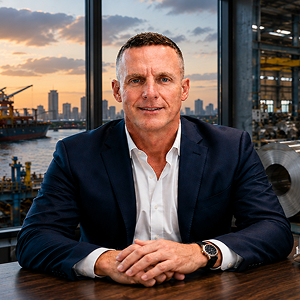
Jason Thomas Ellis
Jason Thomas Ellis is Chairman of Empower Steel Australia Pty Ltd and Executive Chairman of iTrade Steel Pty Ltd. He has held senior leadership roles across BlueScope Steel, Tata BlueScope Steel, Commercial Metals Company, Butler and BHP Lysaght. He holds a BA (Political Science) from the University of Sydney and an MCom (Finance) from the University of Wollongong, and is a Fellow of the Australian Institute of Company Directors.