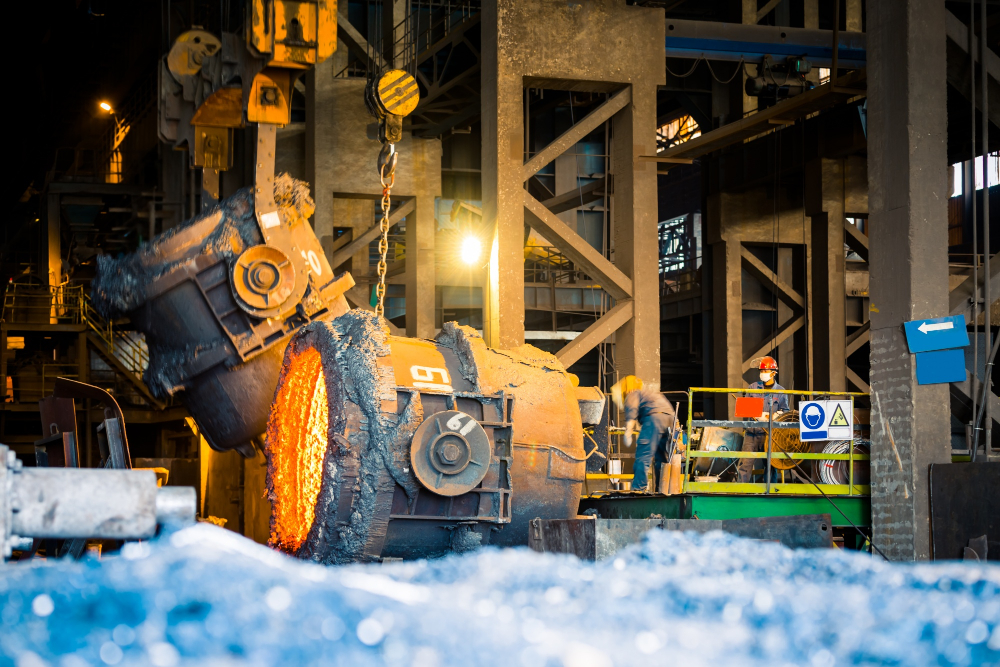
The macro picture in steel at the moment is a genuinely unusual one. The United States has held its steel demand up relatively well, supported by domestic policy, on-shoring investment and infrastructure spend. Most of the rest of the world – Europe, Japan, Korea, Southeast Asia, Australia and, in various ways, China itself – is running slower. That combination creates a specific problem for the industry, and it is worth being clear about what happens next.
Steel does not stop being produced because demand softens. Blast furnaces do not turn off easily. Electric arc capacity is more flexible but still runs against baseload economics. Global steel production capacity was built for a demand environment that no longer exists in the same shape it did five years ago. That surplus supply has to go somewhere.
THE SUPPLY SIDE OF THE PROBLEM
The scale of the imbalance is what matters. Global crude steel capacity considerably exceeds current consumption. In a balanced market that overhang is manageable. In a softening market it becomes the whole story.
Mills faced with softening domestic demand have three options. They can cut production. They can accept lower prices. Or they can export the surplus into whichever markets will absorb it. Most large integrated producers eventually do some combination of all three, but the least expensive of the three, in the short run, is to export. That is what has driven every prior period of global steel-price weakness and it is what is driving the current one.
WHERE THE SURPLUS FLOWS
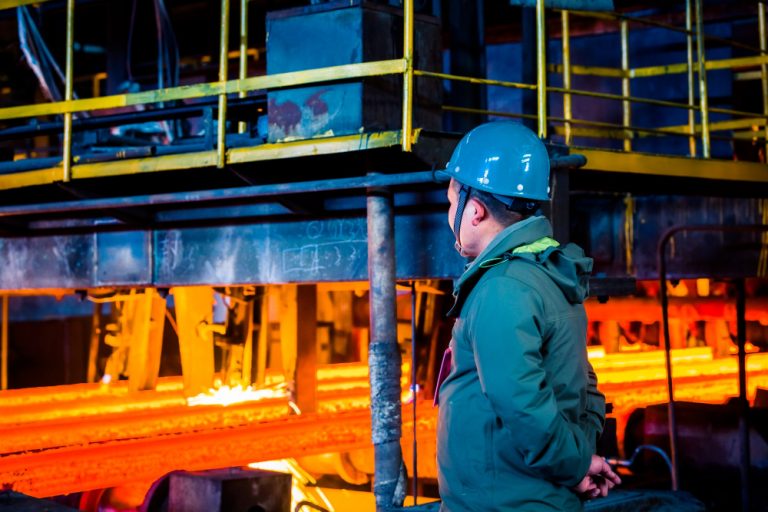
The surplus does not flow evenly. It flows toward markets with the following characteristics: relatively open trade regimes, buyers who prioritise landed price, and thin domestic downstream demand for the specific product being placed. Small and medium-sized open economies, of which Australia is one, are structurally exposed to this pattern.
The lanes to watch in the current environment are the ones where multiple exporters are competing simultaneously for the same import demand. When Chinese, Vietnamese, Indian and Southeast Asian mills are all placing product into the same medium-sized markets, the pricing that results is not a normal reflection of underlying cost of manufacture. It is a reflection of who most urgently needs to move tonnage. That distinction is not a technicality. It is the entire mechanism by which surplus becomes dumping, and dumping becomes a policy problem.
WHAT THIS LOOKS LIKE ON THE GROUND
For any operator selling steel in Australia or in any similar open medium-sized market, the practical signal is straightforward. Landed prices from certain origins in certain product categories are running noticeably below what a normal supply-cost calculation would suggest. Domestic producers are being asked to compete against that landed price, which is difficult when the origin price is not really a market price.
For buyers, the counter-signal is equally straightforward. Cheap steel is available, and it is available in volume. In some categories that is a straightforward win for the downstream buyer. In others it is a short-term win with medium-term consequences, because the same buyer will need supply security when the surplus cycle turns and the current exporters withdraw from the market.
The strategic question, both for buyers and for the industry as a whole, is what mix of low-cost imported product and reliable domestic supply is sensible when the low-cost supply is a function of a temporary global imbalance rather than a durable competitive position.
THE ROLE OF POLICY
Every open economy hit by the current pattern is having some version of the same policy conversation. Trade-remedy investigations are more frequent. Anti-dumping and countervailing duties are being applied more often and across more categories. Safeguard measures are being debated. The European Union has been active on all three fronts. Australia is doing the same, in its own way.
I have my own view on how effective these measures are in isolation, and I intend to write about that separately. What is worth flagging here is that the policy framework is downstream of the trade-flow pattern, not upstream of it. Duties and safeguards move slowly. Trade flows move fast. By the time a measure is in place, the market may already have moved. That is not an argument against the measures. It is an argument for being realistic about what they can and cannot do in a cycle of the current shape.
WHAT COMES NEXT
Three broad scenarios are worth thinking about.
The first is that ex-US demand recovers over the next twelve to eighteen months in one or more of the major consuming markets. If that happens, the surplus pressure eases without further policy intervention, and the global market rebalances at a somewhat higher price level than it currently sits.
The second is that ex-US demand remains soft. In that case the surplus pressure persists, more markets apply more trade-remedy measures, and the global trade-flow map reshuffles as exporters redirect toward the markets that remain open. This is a more difficult scenario for medium-sized open economies.
The third is that Chinese production genuinely rationalises. This is the scenario that everyone in the industry watches for and no one confidently predicts. If it happens, the global picture changes materially. If it does not, the current pattern continues.
The realistic base case is a mixture of all three, unevenly distributed across product categories and origins. That is a difficult environment to plan around, which is exactly why the operators who are best at planning for it will do disproportionately well through the cycle.
CLOSING
Global steel is going through a period where production capacity exceeds consumption in most markets outside the United States, and the surplus is flowing toward smaller open economies. Australia is one of them. The dynamics are not new, but the scale of the current imbalance is unusual by historical standards.
For the industry, this is a period that rewards operational discipline, supply-chain relationships built over long horizons, and pricing that reflects durable cost rather than short-term surplus. For policymakers, it is a period that tests the responsiveness of the trade-remedy framework. For buyers, it is a period that presents both opportunity and risk, and the sensible mix of the two depends on how long the surplus condition is expected to persist.
The one certainty is that the pattern will not stay the way it is forever. Steel cycles turn, and this one will turn too. The businesses that come through it in the best shape are the ones who take it seriously without being panicked by it.
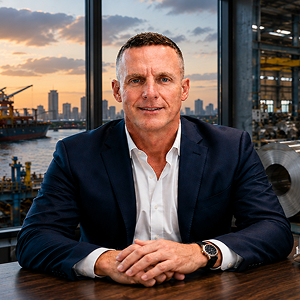
Jason Thomas Ellis
Jason Thomas Ellis is Executive Chairman of iTrade Steel Pty Ltd and Chairman of Empower Steel Australia Pty Ltd. He has held senior leadership roles across BlueScope Steel, Tata BlueScope Steel, Commercial Metals Company, Butler and BHP Lysaght, operating businesses across Australia, India, China, Thailand, Cambodia, Laos, Myanmar and Sri Lanka. He holds a BA (Political Science) from the University of Sydney and an MCom (Finance) from the University of Wollongong, and is a Fellow of the Australian Institute of Company Directors.