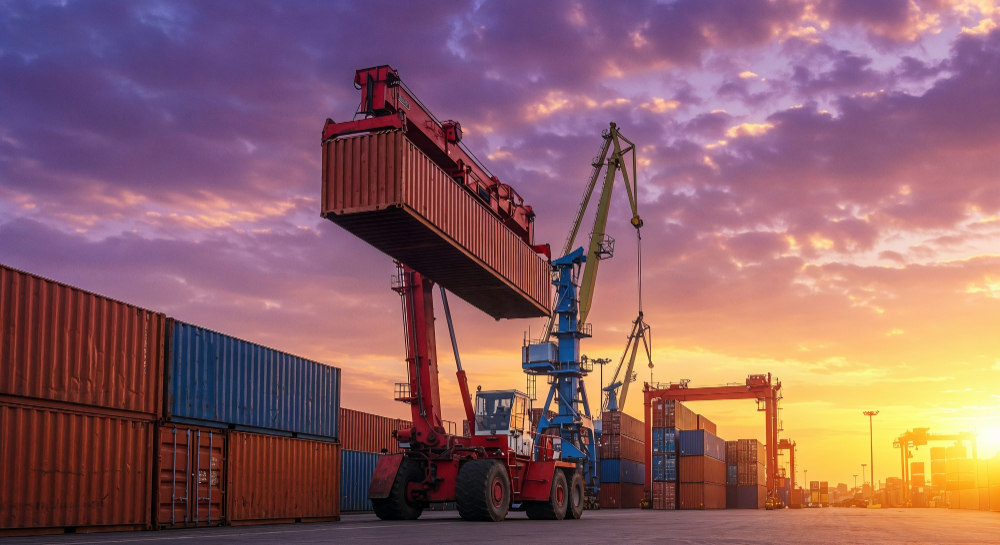
Ask most steel buyers what drives the price of a coil, and they will start with iron ore, coking coal, mill capacity and demand. All of those matter. But there is a component of landed cost that moves more, more often, and with less warning than any of them, and it does not appear on any mill quote: freight.
I have spent thirty years working across steel manufacturing, distribution and trading, from Australia to Southeast Asia, India and China. In that time I have watched freight go from a rounding-error line item to a first-order determinant of whether a shipment lands profitably or not. It is not the biggest single input in the price of steel, but it is one of the most volatile, and the industry does not talk about it enough.
WHY FREIGHT MATTERS MORE THAN IT LOOKS
For a container-grade product moving from a Chinese, Vietnamese or Indian mill to Australia, freight can easily represent a meaningful percentage of landed cost depending on the specification, mode and origin. For bulk product on a chartered vessel, the freight rate can move ten or fifteen percent between quote and load date in a way the underlying steel price rarely does. That is not noise. That is the difference between a profitable line and a loss.
The uncomfortable truth is that most downstream buyers do not price this properly. They look at the mill quote, add a customary freight assumption, and treat the difference as noise or as their trader’s problem. In a stable freight environment that is a reasonable simplification. In a volatile one, it is where margin quietly goes to die.
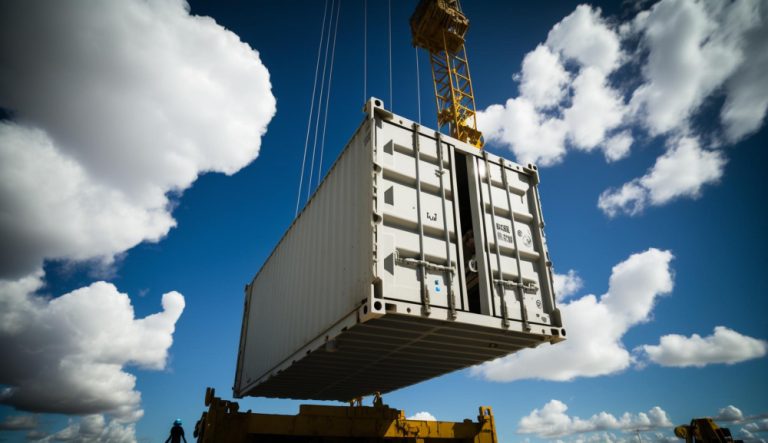
WHAT DRIVES THE VOLATILITY
Steel freight sits at the intersection of several markets that do not always move in the same direction.
Bunker fuel prices track crude, and crude is influenced by everything from OPEC decisions to Middle Eastern tension to seasonal demand. When bunkers move, every rate reprices, and it does so fast.
Vessel availability moves on cycles that are much longer than most buyers appreciate. New tonnage takes years to arrive. Scrapping cycles depend on the second-hand market and scrap-steel prices. When a supply squeeze hits, capacity does not come back quickly, and rates escalate accordingly.
Port congestion is the wild card. A single disruption at a major transshipment hub can move rates across an entire trade lane for weeks. Buyers who have been through the port disruptions of the last five years will recognise the pattern – a small operational event upstream that reshapes landed cost for anyone who happens to be shipping through that window.
Regulation is the slow-moving factor. IMO fuel-sulphur rules, emissions standards and evolving decarbonisation frameworks are quietly changing the cost base of shipping in ways that will show up in freight rates over the next decade whether the market notices in the moment or not.
THE IMPLICATIONS FOR STEEL PRICING
For steel specifically, three things follow.
First, freight has become the primary reason two mill quotes at the same underlying mill price can produce materially different landed costs. Origin matters. Route matters. Vessel type matters. A buyer treating steel from two different origins as fungible on the basis of mill price alone is likely to be surprised.
Second, timing matters more than most buyers structure into their procurement. Locking in a mill price without locking in freight, or vice versa, exposes the shipment to whichever leg moves first. Serious traders and larger buyers hedge or lock both legs together for a reason.
Third, freight volatility compresses the useful shelf life of any price quote. In a stable environment a quote might be good for weeks. In the environment we have now, quotes without a shipping component or a firm date get stale quickly. Buyers who plan around old freight assumptions absorb the difference themselves.
WHAT THE CURRENT ENVIRONMENT LOOKS LIKE
Freight sits, at the time of writing, in a range that most of the industry would describe as elevated relative to the pre-pandemic decade and unstable relative to the last two years. Rates on the major Asia-to-Australia lanes have been reacting to a combination of tighter vessel supply, ongoing port-side friction and the flow-through of regulation. None of this is catastrophic. All of it is meaningful.
The buyers who navigate this environment well share a few characteristics. They have a real relationship with their freight forwarder or shipping counterpart, not just their steel mill. They know what their freight component actually is on each order rather than assuming an average. They lock rates when they can and stay disciplined about timing when they cannot. And they build their downstream pricing to their end customer with freight volatility recognised in the margin, not absorbed silently.
WHY THIS MATTERS FOR THE INDUSTRY
The bigger point is that freight is now part of the strategic conversation about steel supply, not an operational afterthought. Where a mill sits geographically, what routes it services, and how it prices freight into a delivered quote are competitive variables. The mills and trading platforms that build freight visibility into the buyer interface will have a durable advantage over those that treat it as somebody else’s problem. The buyers who insist on that visibility will build more resilient supply chains than those who do not.
This is one of the reasons I spend so much of my current time on the digital-infrastructure side of steel trading. The single biggest under-priced piece of information in a steel transaction, for most buyers, is the freight component. Making it visible, comparable and contractible on a common interface is worth more than most software features get credit for. It changes what buyers can compare, and it changes what mills have to compete on.
CLOSING
Steel freight is the input everyone assumes will behave itself and periodically does not. It moves prices, reshapes competitiveness between origins, and quietly reallocates margin between mills, traders, buyers and end customers. Anyone building a serious steel-buying operation, or a serious steel-trading platform, has to treat it as a first-order variable rather than a line item to be tidied up at the end of the quote.
Thirty years in the industry has taught me to respect freight the way I respect any market I cannot fully control. The market will do what it does. The question is whether the buyer, the mill and the platform in the middle have the visibility and the discipline to price it properly. Increasingly, that is where the durable advantage sits.
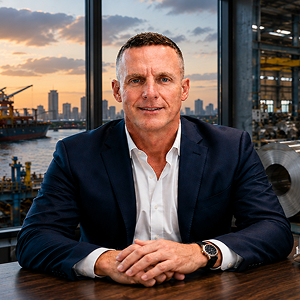
Jason Thomas Ellis
Jason Thomas Ellis is Executive Chairman of iTrade Steel Pty Ltd and Chairman of Empower Steel Australia Pty Ltd. He has held senior leadership roles across BlueScope Steel, Tata BlueScope Steel, Commercial Metals Company, Butler and BHP Lysaght, operating businesses across Australia, India, China, Thailand, Cambodia, Laos, Myanmar and Sri Lanka. He holds a BA (Political Science) from the University of Sydney and an MCom (Finance) from the University of Wollongong, and is a Fellow of the Australian Institute of Company Directors.